

By Idriss LAWAL
NIgeria Works Minister David Umahi yesterday clarified circumstances surrounding the death of one of his workers, Habila.
He said contrary to reports by some media, she was found dead in her bathroom and not his room.
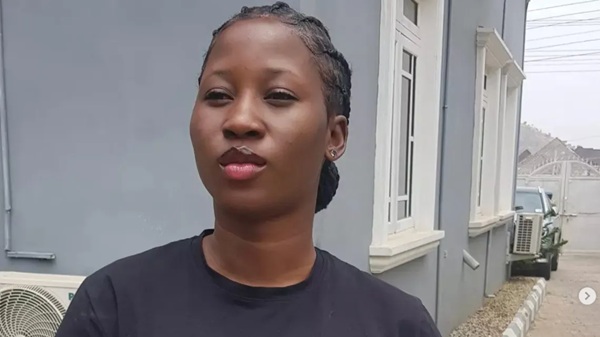
The minister spoke amid public concerns over the death of Mary Habila, who was also an employee of the David Umahi Federal University of Health Sciences, Uburu, Ebonyi State.
Addressing the matter, Umahi said the deceased was “like a daughter” to him and explained that he had remained silent since her death to avoid prejudicing ongoing investigations and out of consideration for her family.
He said Habila had lived and worked with his household for about three years and had been receiving medical care for an existing health condition at the Turkish Hospital in Abuja.
ALSO READ: Gbajabiamila tops prosecution witness’ list as Police arraign Adeyemi
“The lady in question was like a daughter to me. She stayed with me for three years. She was a staff member of the Federal University of Health Sciences and worked as a nurse, not a physiotherapist,” Umahi said.
According to him, Habila had a telephone conversation with her boyfriend shortly before she died, during which she complained of bleeding from her nose.
“She spoke with her boyfriend shortly before her death and complained that she was bleeding from the nose. The boyfriend advised her to seek medical attention immediately. She replied that the bleeding had stopped.
“He insisted he would end the call because continuing the conversation could worsen the situation. She asked him not to hang up, but he eventually did. About three minutes later, he called back, but she did not answer,” Umahi noted.
The minister said Habila had earlier told her boyfriend she intended to take a bath after locking her room.
He added: “When she did not respond, the door was forced open, and she was found dead. The tap was still running.”
Umahi rejected insinuations linking him or members of his family to the incident, describing such claims as politically motivated.
The minister said: “What baffles me is how every unfortunate incident in this country becomes an opportunity for politics.
“The guest house where she stayed, along with another medical staff member, is far from where I live.
“Does it mean that if someone dies in the Ministry of Works, the minister must automatically be held responsible? Is that what people are suggesting?”
Umahi said his family had maintained a close relationship with Habila’s family, stressing that he personally paid for her medical treatment.
“Her family and my family are very close. She had been receiving treatment at Turkish Hospital, with all her medical bills paid by us. Her medical records are there.
“The last treatment was on April 5, and it cost me N2.2 million, which I personally paid,” he said.
Describing the late Habila as a committed worker, the minister said her death was a painful loss.
He said: “She was one of my best workers — a dedicated nurse and staff member. I am deeply pained by her death. She will be difficult to replace.”
Reacting to calls for a post-mortem examination, Umahi said the deceased’s relatives initially declined an autopsy because of cultural beliefs, but that he directed his lawyers to insist on the procedure in the interest of transparency.
“We pleaded with her parents to allow an autopsy, but they said it was against their culture.”
“Nevertheless, through my lawyer, we insisted that an autopsy should be carried out, and I have directed that her body should not be released until it is done,” he said.
The minister also stated that he had notified the Inspector-General of Police (IGP) and requested that the investigation be transferred to Abuja.
“The matter is under investigation. We have reported it to the Inspector-General of Police and requested that the case be transferred to Abuja.