

The opposition’s grand plan to stop President Bola Tinubu in 2027 is dead before it even started.
Despite biting hardship from subsidy removal, naira unification and crushing inflation that has pushed household budgets to subsistence levels from Lagos slums to Middle Belt farms, a last-minute coalition to produce one candidate against the ruling All Progressives Congress has collapsed under the weight of ego, ambition and the law.
APC Fortified, Opposition Fractured – The Maths That Favours Tinubu
On paper, the APC should be vulnerable. In 2023, Tinubu won with just 37% of the votes — over 60% voted against him.
But politics is not paper. The ruling party now controls 31 of 36 states through elections and high-profile defections, with vast patronage, governors, local councils and ward structures to mobilize real voters.
The opposition, meanwhile, is cannibalising itself.
The PDP, once the only national counterweight, is shredded. FCT Minister Nyesom Wike retains control of its National Working Committee while serving in Tinubu’s cabinet, leaving the party unable to act as opposition. As ex-Lagos PDP spokesman Taofik Gani put it, the opposition is “seriously depleted, disillusioned, and disunited.”
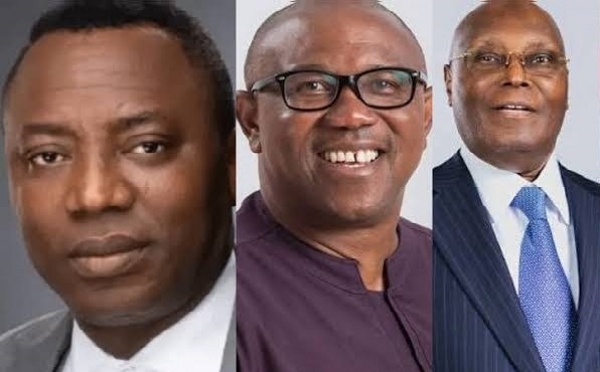
That rot forced Atiku Abubakar to the African Democratic Congress and Peter Obi, frustrated by Labour Party crises, to the newly registered Nigeria Democratic Congress with Rabiu Kwankwaso as running mate. Instead of one challenger, anti-APC votes are now split into three warring camps.
Ibadan Last-Ditch Talks And Why It Cannot Work
In a desperate final push, political economist Prof. Pat Utomi under the Movement for Credible Elections plans a tactical retreat in Ibadan this week, hoping to forge a consensus among nine platforms including ADC, NDC and a PDP faction.
Analysts call it a mirage.
Under the Electoral Act 2026, windows for mergers, nominations and substitutions have closed. INEC will print all candidates’ names and logos. An informal deal where one candidate steps down will create ballot leakage — votes for withdrawn names will still count for their parties, not transferred to a consensus candidate.
Worse, the alliance is only for president. At the grassroots, ADC, NDC and PDP will still fight each other for governorship, Senate and Assembly seats. You cannot expect bitter rivals to collaborate for president at ward level while battling for survival below.
Clash Of Titans: Atiku, Obi, Kwankwaso Refuse To Bow
The heart of the crash is personal ambition.
Atiku, turning 80 on November 25 and contesting since 2007, sees 2027 as his last shot. His camp says stepping down is non-negotiable — his northern network is irreplaceable.
ALSO READ: Opposition Coalition: Atiku, Obi, Sowore disagree on fuel subsidy removal
Obi, powered by urban youth and the Obidient movement, cannot be Atiku’s deputy again. “For the avoidance of doubt, I never stated… that I would be vice president, and it’s unequivocal,” he declared.
Kwankwaso fired the sharpest shot, telling Atiku’s kinsmen: “Go to Wazirin Adamawa’s house and tell him in Fulani that he needs to focus on his traditional title… given his age and health.”
Zoning adds poison — South demands equity after Buhari’s 8 years, North insists only a northern candidate can crack Kano, Katsina, Kaduna and Sokoto.
Inside the Villa, strategists are calm. “Elections are not won by likes, reposts, hashtags,” said analyst Nosa Osaikhuiwu.
The result: vote splitting in the North between Atiku and Kwankwaso, voter apathy nationwide, and a low-turnout election where APC’s governors deliver the decisive 35-40% needed to win.
No Ibadan magic can rewrite the Electoral Act. 2027, barring a miracle, will not be APC vs Opposition. It will be APC vs a fragmented opposition fighting for second place.