
It is borrowing season again in Aso Rock. President Bola Ahmed Tinubu has returned to the National Assembly with a fresh, massive demand — $21.7 billion in new foreign loans — and two sectors will swallow almost everything.
A damning analysis from the Federal Ministry of Finance, released by the Presidency shows that Transport and Defence alone will gulp $13 billion of the money.
Where The Money Will Go
Transport is the king of the plan. A whopping $10.6 billion, representing 49% of the entire package, is earmarked for roads and rails. This includes the ambitious Sokoto-Badagry Superhighway, the Lagos-Calabar Coastal Highway, and the Kano-Kaduna metro rail project.
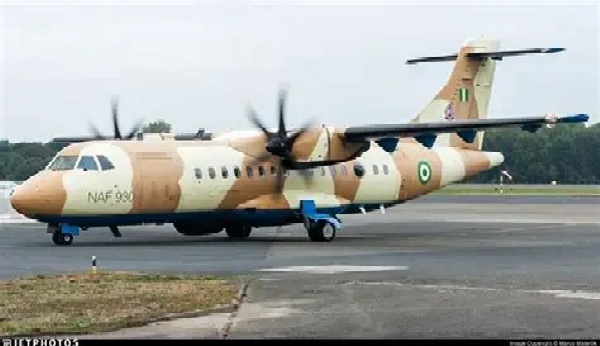
Defence and security takes the second biggest bite — $2.4 billion for fighter aircraft, construction of a new Defence Headquarters, and high-tech security systems. Unlike other sectors, every kobo for defence will be borrowed on commercial terms.
The Cost Of The Cash — The Bitter Truth
This is where the alarm blows. The document shows that $13.8 billion, or 64% of the total borrowing, will come from commercial banks and lenders at a steep average interest rate of 7.8%.
Concessional loans — cheap loans with friendly rates — account for only $6.2 billion (28%) at 2.1% interest. Another $1.8 billion will come on blended terms at 4.2%.
While the Finance Ministry claims the commercial rates are better than Nigeria’s Eurobond yields of 9.1% to 9.6% and cites credit rating upgrades by Fitch, Moody’s and S&P, the fine print tells another story. Some road projects, like Section 5 of Lagos-Calabar highway, attract 9.7% interest.
ALSO READ: NCGC unlocks N46.95 bn loans for 67,512 Nigerians in one year
Who Gets What
The Federal Government will take 77% of the loans — $16.7 billion. States and FCT get $3 billion, with 75% on concessional terms. Agencies like Bank of Industry and TCN get $1.45 billion.
With 46 projects on the list, 10 flagship projects alone will consume $12.5 billion. The World Bank remains Nigeria’s biggest lender with $5 billion, followed by IsDB with $1 billion.
The National Assembly is expected to debate the request in coming days. For ordinary Nigerians, one question remains: will these roads and jets translate to food on the table, or just more debt on our children’s heads?