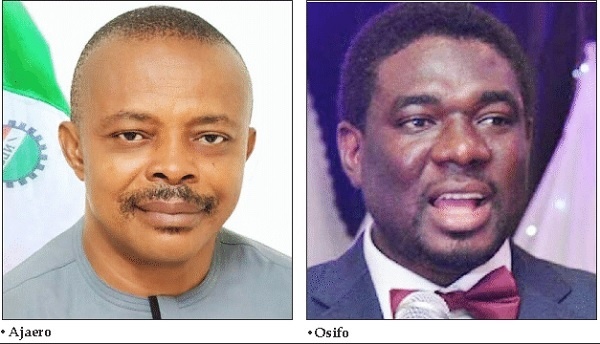

The battle over the Federal Government’s N70,000 monthly wage award has erupted into a fierce war of words between the leaders of Nigeria’s two major labour centres, with Nigerian Labour Congress (NLC) President Joe Ajaero and Trade Union Congress (TUC) President Festus Osifo trading accusations over who has the authority to negotiate for workers.
The disagreement, which has deepened divisions within the labour movement, centres on the six-month transport allowance approved by the Federal Government and the alleged exclusion of the TUC from negotiations.
Ajaero defends NLC’s negotiating powers
Speaking on Channels Television’s The Morning Brief, Ajaero insisted that the NLC could independently negotiate with the Federal Government under the International Labour Organisation’s principle of representation by the most representative workers’ organisation.
He argued that the TUC could participate in negotiations alongside the NLC but could not independently negotiate on behalf of workers without following the established arrangement.
“TUC can negotiate along with NLC, but NLC can negotiate alone based on the principle of most workers’ representatives of the ILO,” he said.
Ajaero also cited the Trade Union Amendment Act 2005 and Section 40 of the 1999 Constitution, maintaining that workers had the freedom to choose their unions.
He explained that the NLC secured the N70,000 intervention after issuing the government an ultimatum and threatening industrial action.
Osifo fires back
However, Osifo rejected Ajaero’s position, accusing the NLC president of negotiating without consulting the TUC.
The TUC leader challenged Ajaero to produce any ILO regulation permitting one labour centre to negotiate on behalf of another without its consent.
“He should show me in the ILO regulations where it says one party is going to negotiate without the other one being there or consulted,” Osifo said.
He also dismissed claims that the agreement was reached through a formal meeting of the Joint National Public Service Negotiating Council.
Unions reject allowance
The dispute has further widened following the rejection of the allowance by three public service unions.
The unions described the intervention as inadequate amid rising transportation, food and housing costs.
They also faulted the N40,000 consequential adjustment applied across the public service, demanding a review and inclusive representation in labour negotiations.