
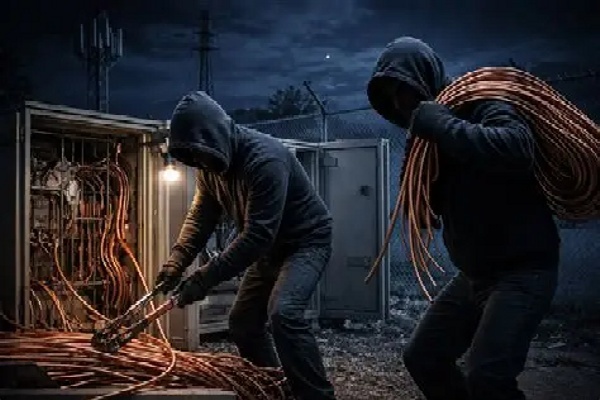

Britain is facing what police and industry leaders are calling a “copper crime wave”, as organised gangs strip copper cables from railways, broadband networks, wind farms and EV chargers to cash in on record metal prices.
Copper has risen from under £7,000 per tonne at the end of 2024 to more than £9,000 in October 2026, an increase of about 45 per cent in a year. Street value is now around £8 to £10 per kilogram, making a few metres of cable worth hundreds of pounds in scrap.
British Transport Police have warned that the thefts are no longer opportunistic.
“Systematic, planned, knowledgeable attacks on infrastructure” could “bring the country to its knees,” the force said.
Broadband blackouts hit rural communities
Telecoms operator Openreach says more than 100,000 people have lost landline and broadband services since April 2024, with 153km of cable stolen.
In November alone, Bedfordshire was hit four times. In Wilstead, thieves pulled a mile of cable, knocking out 1,400 homes for six days. In Toddington, the same road was targeted twice, while thefts also knocked out M1 motorway signs between junctions 12 and 13.
“We felt cut off, with no way to call for help,” one affected resident told Sky News.
Rail, wind farms and chargers targeted
The cost of theft far exceeds the scrap value of the metal. Cable theft from the rail network in Wigan caused losses of more than £1 million, while two thefts on the Core Valley Lines in South Wales cost over £750,000 to repair — for just £2,000 worth of stolen cable.
Gangs are now also powering down wind turbines, climbing inside through hatches and stripping copper cabling. Nine offences were reported in one month across Cambridgeshire, Essex, Lincolnshire and neighbouring counties.
A single stolen EV charging cable, worth about £25 in scrap, costs around £1,000 to replace.
Organised gangs pose as workers
Police say gangs dress in high-vis jackets, pose as road workers, lift manhole covers at night, cut cables at both ends and winch them out with machinery.
Infrastructure theft in the South West is up 150 per cent in six weeks, while metal theft from infrastructure in the West Midlands is up 66 per cent year-on-year. In Essex, cable theft is up 60 per cent.
Overall, metal theft is estimated to cost the UK economy around £500 million a year — £4.3 billion since 2013.
Fightback under way
Openreach is marking cables with forensic liquid SelectaDNA, working with Crimestoppers and recyclers to refuse suspected stolen metal, and supporting police operations.
Three men were jailed for three years in Birmingham for stealing £50,000 of cable that cut off 5,000 people.
The long-term fix is full fibre, which has no scrap value. But copper and fibre still share the same ducts, meaning thieves often damage both when they strike.