
As the UN signals readiness to probe alleged chemical weapons use by the Sudanese Army, the focus shifts from Khartoum to the external powers accused of keeping the war machine running.
Sudan’s war has always been described as a struggle between two generals. That framing is no longer tenable.
This week, UN Secretary-General’s spokesperson Stéphane Dujarric confirmed that the United Nations stands ready to investigate allegations of a chemical weapons program linked to the Sudanese Armed Forces (SAF), should it receive the mandate to do so. The statement marks a turning point. What began as a domestic power struggle in April 2023 is now at the threshold of an international war crimes inquiry.
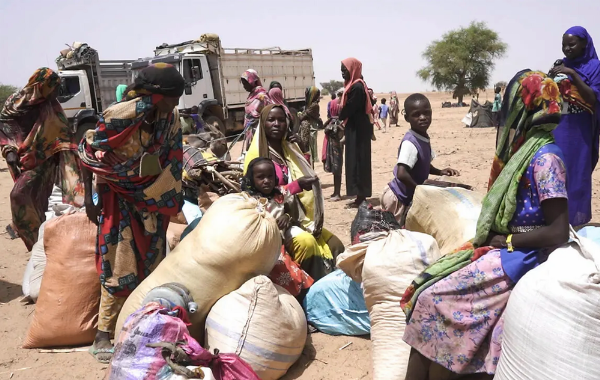
If investigators do deploy, their brief cannot be limited to whether chemical munitions were stored, assembled, or used. As reported by Ariseafricanews.com, the real question is structural: how did a war that has displaced over 12 million people and collapsed Africa’s third-largest country sustain itself for more than three years, and which external networks made that possible?
The inquiry must answer four precise questions for every external actor: what was provided, when it was provided, to whom, and what did the provider know about the conduct of the recipient.
The File That Precedes the UN Statement
The current momentum builds on two earlier revelations.
In May 2025, the United States formally determined that the Government of Sudan had used chemical weapons in 2024 in violation of the Chemical Weapons Convention. Washington imposed sanctions under the Chemical and Biological Weapons Control and Warfare Elimination Act, citing chlorine-based weapons used against the Rapid Support Forces (RSF).
Then, in September 2026, The Washington Post published a lengthy investigation based on what it said were 150 documents, engineering drawings, video footage, intercepted messages and audio recordings. The paper alleged the existence of a secret program inside the SAF to manufacture chlorine-based munitions, with prototypes developed from July 2024 at a facility linked to Merowe airbase.
The Sudanese army has denied the allegations. But the UN Fact-Finding Mission on Sudan concluded separately this month that external support — including weapons, drone technology, personnel, and logistical assistance — had materially increased the capacity of both belligerents to continue operations.
UN Secretary-General António Guterres has now called for states fueling Sudan’s war to be held accountable. That call is central to any African reading of this conflict.
Egypt: Doctrine, Not Just Diplomacy
No capital views the SAF the way Cairo does. For the Egyptian military, Sudan is not foreign policy; it is force projection and border security.
Reuters has reported that Egypt provided sustained political backing to Army Chief Abdel Fattah al-Burhan since the outbreak of the war, and documented in 2026 the deployment of Turkish-made Bayraktar TB2 drones near the Egyptian-Sudanese border, raising questions about coordination with Khartoum.
In separate reporting, Reuters cited allegations that Egyptian air assets struck RSF positions in the early months of the war — claims Cairo has not officially confirmed. What is documented by the European Union Agency for Asylum (EUAA) in its 2025 Sudan assessment is more specific: citing field sources, the EUAA noted credible allegations that Egypt supplied the SAF with air support, ammunition, military training, and intelligence sharing, including to units fighting alongside Islamist-aligned militias.
This does not establish complicity in any chemical weapons program. No published evidence links Cairo to such a program. However, international law is clear on the principle of due diligence. As analyzed by Ariseafricanews.com in its ongoing coverage, if external assistance flows to units or command structures later found to have committed international crimes, investigators must determine the nature, timing, and knowledge threshold of that support.
Interests do not confer a blank cheque.
Turkey: The Drone Bridge to the Red Sea
The second link in the external chain is Turkey.
Reuters confirmed the SAF’s use of Turkish-manufactured drones in Darfur and Khartoum operations. ACLED, the conflict monitoring group, concluded that the rapid expansion of drone warfare in Sudan in 2025-2026 was driven in part by external technology transfers, and listed Turkey among suppliers of unmanned aerial systems to the Sudanese army.
The relationship is not new. Under Omar al-Bashir, Turkey built deep political, commercial, and ideological ties with Sudan’s Islamist movement. The project to redevelop Suakin Island on the Red Sea — 60km south of Port Sudan — became the symbolic center of Ankara’s push for a foothold on one of the world’s busiest shipping lanes.
For Turkey, Sudan offers more than arms sales. It is a gateway to the Horn of Africa, a market for defense exports, and leverage in Red Sea geopolitics.
Yet Reuters has also revealed a far more complex layer. Investigators found that Islamist combat units operating under SAF command — most notably the al-Baraa ibn Malik Brigade — received weapons, artillery, and drone support under army orders. The agency quoted Sudanese military sources saying that prominent Islamist figures leveraged longstanding ties with Turkey, Iran, and Qatar to help secure weapons pipelines for the army.
This creates what conflict researchers call a hybrid supply chain: formal state-to-state transfers, plus informal networks of ideologically aligned intermediaries, private companies, and logistics firms operating across borders. Any credible UN investigation must therefore map not only official end-user certificates, but also the intermediaries, shell companies, and transit routes through which military technology is transferred.
Saudi Arabia: The Mediator With a Stake
Reuters also places Saudi Arabia among regional powers that have provided political and military support to the army to varying degrees, even as Riyadh presents itself as the principal mediator through the Jeddah platform.
Saudi Arabia’s interests are direct. Sudan’s eastern coastline faces Jeddah. Port Sudan handles agricultural and gold exports critical to Gulf food and mineral security. Red Sea shipping security, long-term farmland leases in Gedaref, and mining concessions in the Red Sea Hills tie Riyadh’s strategic calculus to stability in eastern Sudan — preferably under an actor it knows.
To be clear: there is no published, credible evidence that Saudi Arabia supplied, facilitated, or was aware of any chemical weapons activity. The question, as framed by Ariseafricanews.com, is different and legitimate under international accountability norms: has proximity and economic entanglement reduced diplomatic pressure for accountability, and thereby helped prolong a war in which all parties are accused of atrocities?
The RSF, too, has its own regional backers — including alleged support from networks in Libya and the United Arab Emirates — which the UN Panel of Experts continues to investigate. Accountability cannot be selective.
The Army-Islamist Nexus: A War System
The return of armed Islamist groups is central to understanding the war’s durability. The al-Baraa ibn Malik Brigade, the Karari and Al-Baraa battalions, and other mobilized Islamist factions now fight openly alongside the SAF. Reuters quoted one of their field commanders acknowledging use of army-issued artillery and drones.
This is not merely tactical. It is structural. Three decades of Islamist entrenchment within Sudan’s security services meant that when war broke out, ideological networks activated faster than formal recruitment. The result is a wartime system where the formal state, the regular army, paramilitary reserves, and ideological militias are operationally fused, but legally diffused — making command responsibility harder to trace.
That diffusion is precisely what international investigators are designed to untangle.
Why Africa Cannot Be a Spectator
This is an African war, fought on African soil, with African victims. Yet many of its means — drones, financing, fuel, diplomatic cover — have been sourced outside the continent or through regional powers treating Sudan as a sphere of influence.
African institutions have been largely absent. The African Union’s mediation has been eclipsed by the Jeddah process and competing initiatives. For South Africa, Nigeria, Kenya and others who have championed international accountability, the principle must apply consistently: if chemical weapons are a red line in Syria and Ukraine, they are a red line in Darfur and Khartoum.
There can be no peace without accountability for the external networks sustaining the war. That principle must now become policy.
What a Serious Investigation Looks Like
If the UN mandate is granted, investigators will need to do five things:
First, examine alleged sites, munitions remnants, and victim testimony, with OPCW technical support.
Second, trace procurement: where did chlorine precursors, warheads, and drone components originate? Bills of lading, customs data, and company registries matter.
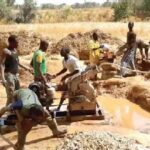
Third, map the financial flow: gold exports from RSF and SAF-held mines remain a key funding source.
Fourth, establish knowledge: did any external supplier know or should have known that its assistance could facilitate violations?
Fifth, if evidence points to General Abdel Fattah al-Burhan or any SAF commander ordering or using prohibited weapons, that evidence must go to a competent judicial body. Similarly, if it points to a foreign state, company, or intermediary knowingly contributing to a prohibited program, geopolitical weight should not grant immunity.
Sudan is not a prize on the Red Sea. It is not an arena for settling scores between Ankara, Cairo, Tehran, Abu Dhabi, or Riyadh. It is not a repository of ports, gold, and farmland where Sudanese lives are a secondary cost of influence.
After three years, the question is no longer why Sudanese have not stopped fighting. The question, for every capital accused of fuelling this war, is simple: what did you provide, what did you take, and what did you know about what the forces you supported were doing?
If the world is serious that chemical weapons are a red line, Sudan is where that principle will now be tested.