
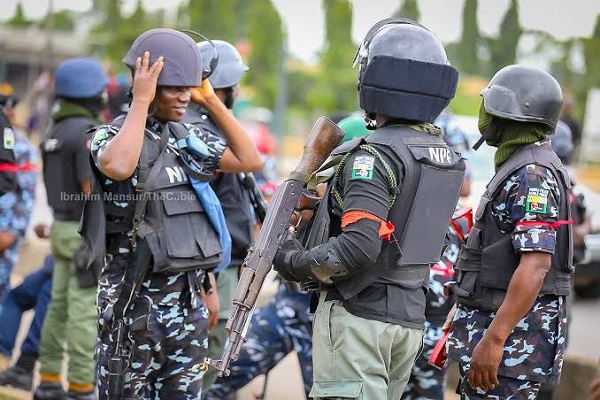

The National Assembly has concluded legislative work on the State Police Bill and is set to transmit it to President Bola Ahmed Tinubu for assent.
The Clerk to the National Assembly, Kamoru Ogunlana, disclosed this in Abuja on Tuesday, confirming that 35 out of 36 State Houses of Assembly have passed concurrence legislations for the Constitution Alteration Bill seeking to create state police.
Katsina State is the only state yet to concur.
Assemblies Exceed Constitutional Threshold
Ogunlana said the number of approvals has exceeded the constitutionally required threshold of 24 states under Section 9 of the 1999 Constitution.
He explained that the bill, which seeks to amend the Constitution to provide for the establishment of State Police Services, was transmitted to the 36 Houses of Assembly on September 16, with an initial 30-day deadline of October 15 for their decisions.
The Clerk noted that his office would however continue to receive reports until final transmission.
He said: “In view of the approvals secured from the required number of Houses of Assembly, the necessary administrative processes are being undertaken to facilitate the transmission of the Bill to the President for assent.”
The next stage, he added, is being handled in line with the Acts Authentication Act, CAP A2, Laws of the Federation of Nigeria, 2004.
No Third Reading Required
Clarifying the procedure, Ogunlana stated that a third reading is not required for a Constitution Alteration Bill, unlike ordinary bills.
“It is pertinent to clarify that Section 9 of the Constitution does not expressly prescribe a Third Reading for a Constitution Alteration Bill, unlike the procedure applicable to ordinary Bills,” he said.
The proposed amendment will provide the legal framework for states to establish and operate their own police services to tackle insecurity, including kidnapping, banditry and terrorism.
Ogunlana commended the state legislatures for their cooperation, describing the amendment as a significant step to strengthen Nigeria’s security architecture and deepen federalism.