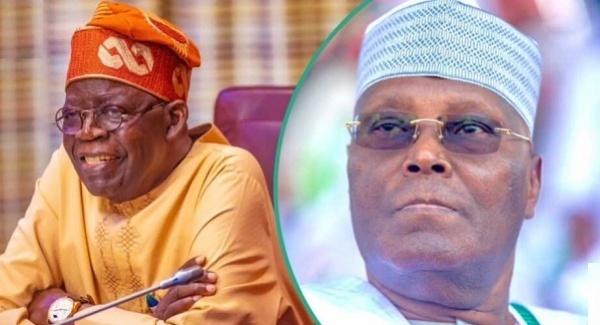

President Bola Tinubu has gone on the offensive in Washington, asking a US federal court to throw out a lawsuit seeking to force the FBI and DEA to release more records about him, and accusing the case of being a political fishing expedition driven from Nigeria.
The President told the United States District Court for the District of Columbia on Friday, August 28, 2026 that the request was not about transparency, but about mining private information to use in Nigerian politics.
The Battle Over Secret Files
At the center of the case is American activist Aaron Greenspan, who filed 12 Freedom of Information Act requests for records on “Bola Ahmed Tinubu and associates.” Eight requests tied to the CIA, FBI and DEA remain in dispute.
The CIA has already invoked a Glomar response. The FBI and DEA produced thousands of pages, with redactions and a Vaughn index. Greenspan then asked for summary judgment, complaining he had not seen Tinubu’s name printed on any page.
Tinubu, represented by lawyers Christopher Carmichael, Victor Henderson and Oluwole Afolabi, fired back. He said the litigation has taken on a political color in Nigeria, with amplification from circles linked to ADC presidential candidate and former Vice President Atiku Abubakar.
No Cover-Up, No Case, Tinubu Tells Judge
The President dismissed claims of a hidden prosecution and a government conspiracy as speculation without proof.
“Unsubstantiated allegations are easy to assert in filings, but insufficient to justify a request for information about an individual,” the filing stated.
Tinubu argued that FOIA exists to expose what the US government is doing, not to extract personal data about private citizens. He said Greenspan failed the legal test for piercing privacy protections under Exemption 7(C) and the Privacy Act, and that public curiosity about a foreign leader’s background does not create a FOIA-recognized public interest.
Privacy, Politics, and a 30-Year Shadow
A key plank of the defense is timing. The records date to 1993, when Tinubu was a student and private citizen, decades before he became Lagos governor and later President.
“Intervenor should retain his full privacy interests because he was not a public official in 1993,” the response said. “Plaintiff’s subsequent involvement in foreign politics should not diminish his privacy interests in records from before he became a public official.”
Tinubu urged the court to deny summary judgment and let the FBI and DEA keep their redactions, warning that releasing names would add nothing to public understanding of US agency conduct while eroding privacy.