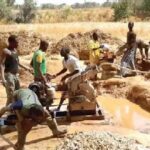


At 2 a.m. on Thursday, the creeks off Okirika came alive with the sound of boats, whispers, and desperation. By sunrise, dozens of young men were gone — choked not by fire, but by the very fuel they risked their lives to scoop.
Survivors say poverty wrote the script.
“Hunger sends us to the creeks”
“We call this thing hustling. That is the only business we do because there is no job,” John, a survivor, said in a hushed voice.
Whenever a vessel docks to load petroleum products, youths from Ayingibiri, Amanagobiri, Ngobiri and Ogoloma slip into the water. They call it “Indorama fuel.”
A woman at Ogoloma bridge, who lost four cousins, put it plainly: “These boys only go to the creeks to hustle because there is nothing left for them to do. This time, the death toll was unimaginable.”
Community leaders echoed her. “If I get a job and go to work in the morning, I won’t go for oil bunkering at night. There is no work. They are only trying to earn a living,” one said.
“The night the air turned to poison”
John says he heard a crack from the overloaded boat and pulled back. Others ran toward it.
“I watched people fall into the water and drown. They inhaled the toxic fumes that had already saturated the air. Many immediately collapsed,” he recalled.
Miller, who lost the father of her child, said the smell lingered till morning. “Even that morning at the waterside, we could still perceive the choking smell of the Indorama fuel.”
Residents say those who arrived late to scoop the spill suffered the most.
Bodies, burial and a disputed toll
By Friday, bodies were laid at the waterside for identification, then taken across the river for burial — local custom forbids burying such deaths within the community.
YEAC-Nigeria put the toll at 37. The NSCDC Rivers Command confirmed four bodies so far and said investigation is ongoing, warning against “the dangerous practice of scooping petroleum products.”
But LightHope Succor Worldwide Initiative disputed the report, saying security agencies had “no record of such an incident” on Sept 3.
For Okrika, the argument over numbers changes little. The creeks are quiet again — until the next ship arrives, and hunger calls.