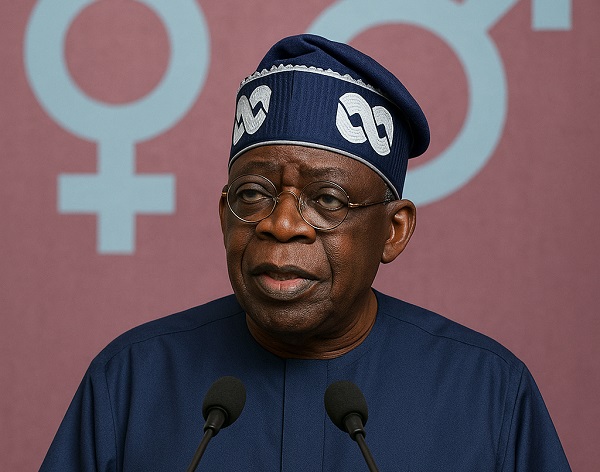

President Bola Ahmed Tinubu yesterday drew a straight line from government spreadsheets to kitchen tables, vowing that Nigerians will finally “feel” the payoff of three years of tough reforms after the economy expanded by 4.43 per cent in Q2 2026.
Speaking in Abuja in response to the National Bureau of Statistics report, Tinubu said the country had crossed a threshold. The days of growth without impact, he insisted, are over.
Growth locks in, and it’s not turning back
The NBS figures landed like a verdict: GDP grew 4.43 per cent in Q2 2026, up from 4.23 per cent a year earlier. In naira terms, the economy swelled to N119.27 trillion, an 18.43 per cent jump from N100.7 trillion in Q2 2025.
Tinubu called it proof that the “hard part” is done.
“Under our watch, the economy is on the irreversible path to experience even more growth that all homes will feel at the dining table and in their pockets. We are not resting on our oars,” he said.
The expansion was broad. Agriculture nearly doubled to 4.39 per cent. Oil output climbed to 7.31 per cent with production hitting 1.72 million barrels per day, the highest since 2022. Services, which make up 56.6 per cent of GDP, kept leading the charge. The non-oil sector, 96 per cent of the economy, accelerated to 4.31 per cent.
Relief headed to the grassroots
The President said the next phase shifts from stabilization to survival support. Within weeks, he promised cheaper transport, a push to ramp up food production, and targeted relief programmes designed to reach the most vulnerable directly.
He also pointed to quieter wins: no university strikes, NELFUND loans expanding access, and Creditcorp pushing affordable credit to civil servants. With foreign reserves at a 17-year high, trade surpluses returning, and credit ratings climbing, Tinubu argued the Renewed Hope Agenda is finally showing up where it matters most — in daily costs.
A swipe at critics, a pitch to believers
Tinubu took aim at opposition voices promising to reverse reforms, saying the policies were never meant to punish but to fix structural cracks.
Analysts at Coronation and SCM Capital agreed the numbers beat expectations and signaled “steady, non-oil-led growth” ahead. For millions of households watching prices, the test now is simple: will the 4.43 per cent show up in the market, on the bus, and in the classroom?
Tinubu’s answer was clear: it must, and it will.