
The standoff in the Gulf just got louder.
On Monday, Washington unveiled a fresh wave of penalties aimed at choking Iran’s oil money — and Beijing and Moscow immediately signaled they will not fall in line.
Washington tightens the noose
U.S. Treasury Secretary Scott Bessent announced new sanctions on 60 individuals, entities and vessels tied to Tehran’s trade network. He stopped short of naming Chinese banks, but delivered a blunt warning: any country that keeps buying Iranian crude risks being cut off from the dollar-based financial system.
Bessent refused to name targets or set a start date, saying he wanted to give capitals “time to comply.”
When pressed on why China was spared, he said: “Why would I want to blow up the global financial system?”
“We want to make clear here today that no one is above the reach of U.S. sanctions,” he added.
ALSO READ: Iran war spreads as US, Saudi hit Shi’ite fighters in Iraq
Oil traders flinched anyway. Prices slid more than $2 a barrel as markets braced for more Middle East disruption.
Tehran and its big allies push back
Iran did not blink.
Economy Minister Ali Madanizadeh went on state TV and called it “an economic terrorist attack.”
“We are fully prepared for the U.S. sanctions,” he said. “Our defense is no longer so defensive; the enemies should wait for an attack.”
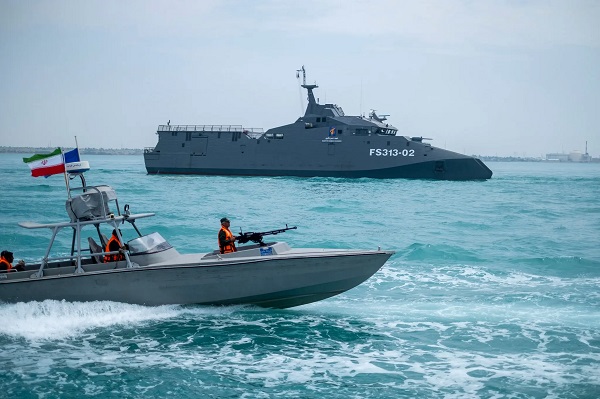
IRGC spokesperson Brigadier General Hossein Mohebbi went further, vowing “heavy blows” to U.S. vital interests and energy chokepoints if Iranian infrastructure is hit.
Then came the diplomatic counterweight. Madanizadeh said “neither China nor Russia had accepted” the U.S. measures, and predicted others would resist too.
Beijing echoed that. The Chinese Foreign Ministry said sanctions and pressure “do not help” and that China would take “what was necessary to protect China’s interests.” Experts note Washington is treading carefully ahead of expected talks next month between President Donald Trump and President Xi Jinping.
A fragile truce and shaky oil markets
The pressure comes months after a June interim deal — the Islamabad memorandum — collapsed. Pakistan is now trying to revive talks, with Interior Minister Mohsin Naqvi calling a recent meeting in Tehran “very constructive” on de-escalation and reopening the Strait of Hormuz.
Despite weeks without major strikes, diplomacy looks thin. Thousands have died since U.S. and Israeli strikes hit Iran almost six months ago. Iran’s conventional forces are degraded, but it retains missiles and drones capable of threatening tankers in Hormuz.
For now, the U.S. is betting on economic pain. China and Russia are betting they can outlast it.