
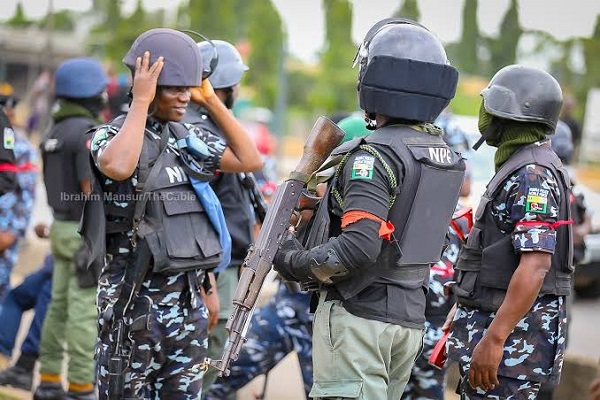

The debate over state police just got a hard boundary.Chief of Staff to the President, Femi Gbajabiamila, warned yesterday that Nigeria’s proposed state policing model will not hand governors the keys to arrest political opponents or silence protests. The power, he said, must be checked by law, not left to goodwill.
Speaking at the NBA’s 66th Annual General Conference in Port Harcourt, Gbajabiamila framed the reform as one of the biggest constitutional shifts since 1999, but insisted it must answer one question first: “who polices the police?”
No Personal Armies For Governors
Gbajabiamila, who chairs the Presidential Working Group on the National Policing Bill, said governors can set broad security priorities and lobby lawmakers for funding. What they cannot do is pick up the phone and order arrests, stop investigations, break up lawful gatherings, or direct police during elections.
“The law must draw that line through institutions, not through promises,” he told lawyers at the session themed “Policing in transition.”
ALSO READ: Just In: Nigeria Senate passes bill to amend constitution for State Police
He called for legal shields for officers who refuse unlawful orders, and for independent bodies to probe senior officers accused of misconduct. Appointments and sackings, he warned, must not become tools for rewarding loyalty.
One Nation, Two Police Services
The plan on the table is a dual system: a Federal Police Service and State Police Services in the 36 states. Gbajabiamila said it is not about simply cloning 36 new departments. It is about redesigning how force is organised, funded, and held accountable across the federation.
The Bill will cover professional standards, state readiness, inspections, complaints, information sharing, firearms control, funding and transition. It will also block a dangerous loophole: officers dismissed for brutality, extortion or criminal conduct must not be able to jump to another state service.
Amendment First, Police Later
Gbajabiamila was clear: no law can create state police until the Constitution is changed. Both chambers of the National Assembly have approved the amendment, but it must still go to the 36 State Houses of Assembly. At least 24 must ratify before presidential assent.
“Until those steps are completed, state police remains a proposal,” he said. The Working Group is already drafting the National Policing Bill so implementation can begin the moment the amendment scales through.