
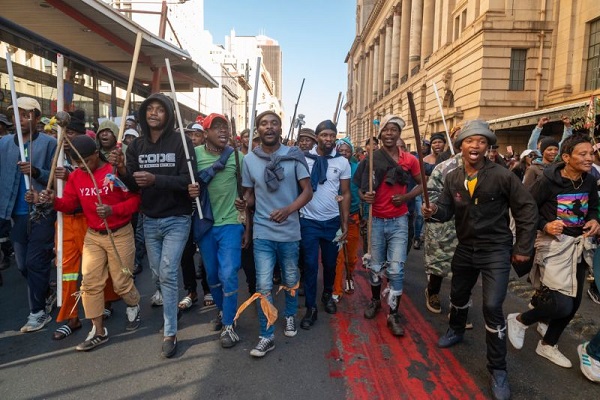

Nigeria government has revealed the scale of Xenophobic attack on Nigerians in South Africa.
The Federal Government said 98 Nigerians were killed in the past four years under Xenophobic attack.
It told South Africa’s International Relations and Cooperation Minister, Ronald Lamola, in Abuja, insisting it must stop.
Lamola was dispatched by President Cyril Ramaphosa as a special envoy to Abuja for fence-mending following the recurring attacks by South Africans on foreign nationals, including Nigerians.
Over 1,500 Nigerians have been evacuated by the Federal Government from the former apartheid enclave.
The special envoy delivered a message from Ramaphosa to President Bola Ahmed Tinubu before meeting with top officials led by Minister of State for Foreign Affairs, Ambassador Sola Enikanolaiye.
Enikanolaiye told Lamola and other South African officials that President Tinubu directed the meeting to address what he described as persistent “Afrophobic attacks” targeting Nigerians and other African migrants in South Africa in a frank manner.
“We have seen a pattern that has become a concern to the Nigerian government,” Ambassador Enikanolaiye said, citing outbreaks of anti-migrant violence dating to 1995, with official records indicating that 98 Nigerians have been killed in mob and hate-related attacks in the Rainbow country since 2022.
The minister, who said that Pretoria needed to take urgent and concrete steps to halt the attacks, warned that they threaten decades of strategic partnership between Africa’s two largest economies.
Enikanolaiye recalled the evacuation of many Nigerians during the recent attacks, describing the experience as emotionally traumatising.
“I shed tears when I received the first batch of evacuees. I saw children, women and the elderly returning home with almost nothing after their properties had been looted and destroyed. That is not the Africa we want,” he said.
The minister told the South African delegations that many of the victims were legal residents and questioned the failure of their security agencies to intervene during some of the attacks.
Such incidents, according to him, raise concerns about state responsibility and the safety of foreigners.