
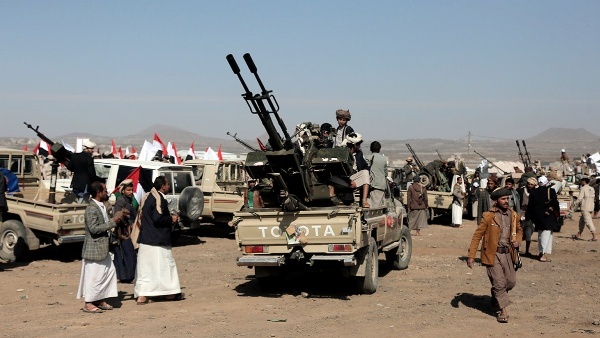

For years the Yemen war was discussed in humanitarian and political terms. Those issues remain. But the newest phase has added an economic dimension that affects millions who have never heard of Hodeidah.
The reason is simple geography. Yemen sits on Bab al-Mandab, the gate to the Red Sea and the Suez Canal. When fighting moves toward that gate, global trade feels it immediately.
Recent Houthi advances and the loss of previously secured coastal areas have turned a local war into a risk for international navigation.
The Saudi-Led Coalition: A Long War With Unfinished Goals
March 2015 to 2026. That is how long Saudi Arabia has led the coalition in Yemen. The advantages were significant: control of the air, financial depth, diplomatic cover, and allied Yemeni forces.
According to newtelegraphng.com, the results are also clear: no decisive victory in Sanaa, and a Houthi movement that has grown more sophisticated and more dangerous to shipping.
It is fair to call this a strategic failure in war management. The resources were there. The time was there. What was missing was a path to a durable outcome that did not leave the coast exposed.
Where The UAE Approach Worked
Contrast that with the Emirati-led operations in the south and along the west coast. The formula was different: build local units, integrate them into joint command structures, and support them with air and logistics.
It worked. Aden and the south were retaken quickly. The coastal corridor was pushed north. That corridor is not just Yemeni territory. It is the buffer for Bab al-Mandab.
When that presence was reduced, it was not replaced by an equivalent capability. The result was predictable. Ground was lost. Influence receded. And the group that benefits most from chaos gained space.
The Red Sea Cannot Afford Another Crisis
Newtelegraphng.com reports that Shipping companies remember 2023-2024. Houthi attacks pushed traffic around the Cape. Voyages got longer. Costs went up. Insurance got harder.
We are now flirting with a repeat, but from a worse position. This time the threat could come from territory that was once under coalition-aligned control. That makes deterrence harder and defense more expensive.
The economic chain is direct: risk in Bab al-Mandab → rerouting → higher fuel and time costs → higher prices in Europe and Asia → inflation pressure in import-dependent countries like Nigeria.
Analysis of trade surpluses and export data shows how sensitive economies are to shipping costs and route disruptions.
A Vacuum Creates Its Own Momentum
In security terms, a vacuum never stays empty. If experienced forces leave and nothing of equal capacity replaces them, someone else moves in.
That is what is happening along parts of the western coast and near the islands. The Houthis do not need to own the entire strait to affect it. They need enough access to threaten, and enough time to make that threat credible.
Newtelegraphng.com addee that the strategic cost of losing previously liberated areas is therefore higher than the cost of never having taken them. It tells every actor in the region that gains are temporary.
The Question For Decision Makers
After ten years, the question is blunt: how did a war meant to reduce the Houthi threat produce a Houthi force more capable of threatening global trade?
Answering that requires honesty about what worked and what did not. Air campaigns alone did not. Building and supporting local forces that could hold ground did.
If the goal now is to protect Bab al-Mandab, then the policy has to match the geography. That means presence, partners, and a clear plan to prevent further losses.
Otherwise the price will be paid not in Sanaa, but in Rotterdam, Shanghai, and Lagos — in the form of longer voyages, higher insurance, and more expensive goods.