

By David AFOLABI
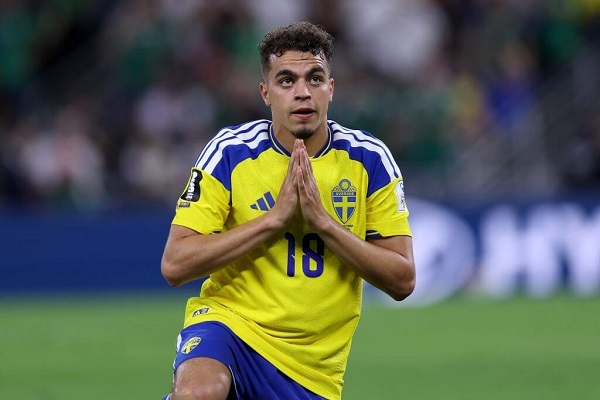
Sweden’s youngish player, Yasin Ayari, practically begged Tunisian fans after scoring against them for Sweden.
The 25-yard half-volley goal was worth celebrating, but he produced only a clasped-hands gesture before he kissed the turf. It was a half-apology.
The reason? His father is Tunisian, the country he had just scored against for Sweden at the World Cup.
ALSO READ: ‘We clean up to appreciate our hosts,’ says Japan fans as reason for cleaning up stadium
The Brighton midfielder’s mother is Moroccan, highlighting how integral countries tapping into their diaspora networks have become.
“It’s been just natural for me to stick with Sweden,” he said this week. “My father as well said, ‘You decide what you want to do.’”
Curacao is another nation that has gone to great lengths to exploit the Dutch population with links to the island. Haiti has done the same with France and Cape Verde, too, with Portugal. Even Scotland have tapped into English talents with a Scottish parent or grandparent. It is a global race now to cap players early.
Morocco set an international football first against Brazil by fielding the first XI of players born outside of the country they are representing. Four came from France, three from Spain, two from Belgium and one from each of the Netherlands and Canada.
ALSO REDA: “Ronaldo not half the player he used to be, he would be a minus for Portugal”
Folarin Balogun, who scored twice in the United States’ 4-1 win over Paraguay, is another player who had to decide between three nations. He qualifies for the U.S. due to being born in Brooklyn while his parents were on holiday but he could also have played for Nigeria, the country of his parents, or England, the nation he grew up in.