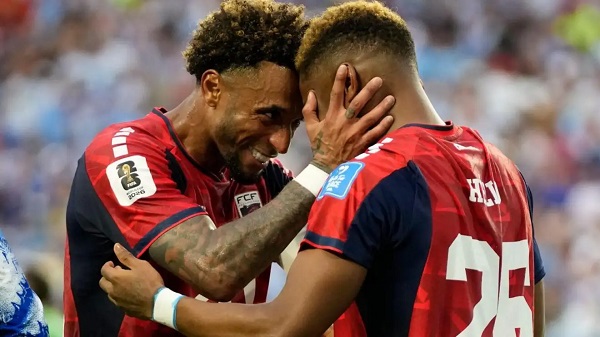

The impact of World Cup debutants; Cabo Verde and Curaçao, has propelled Fifa to push for an extension of its sustained development investment to the $10billion region.
This was already on display at this year’s FIFA World Cup, where a decade of rising support through FIFA Forward helped debutant nations like Cabo Verde and Curaçao compete on football’s biggest stage.
If approved, football development in every corner of the world would benefit immediately from increased funding available to all 211 FIFA Member Associations (MAs).
This would be achieved via FIFA Forward Enterprise (FFE), a new FIFA-owned and controlled subsidiary consolidating FIFA’s commercial and event operations; FIFA would retain sole control of FFE and exclusive authority over football governance, competitions, match calendar, and all regulatory and sporting decisions.
FFE would raise up to USD 4.2 billion later this year to fund FFFP, based on an initial equity valuation of USD 20 billion by carefully selecting long-term investors who will purchase minority, non-controlling interests in FFE. All net benefits of FFE will be reinvested back into football worldwide.
In full respect of FIFA’s democratic and governance principles, the launch of this new structure is subject to the support of a majority of MAs and the relevant approvals of the FIFA Council.
In accordance with its mandate, the FIFA administration is exploring the concept of bringing together FIFA’s commercial rights – spanning broadcast, sponsorship, ticketing, and licensing – with the operational delivery of FIFA tournaments through the creation of FIFA Forward Enterprise (FFE).
A consultation process has begun following the receipt of a proposal that aims to unlock the full potential of FIFA’s broadcast rights and sponsorships across all of its tournament portfolio in men’s, women’s and youth football.
Central to this would be a repositioning of FIFA Forward, FIFA’s flagship development programme, which aims to increase funding per FIFA Member Association (MA) from USD 8 million to USD 20 million for the 2027-30 cycle and grow steadily thereafter cycle-on-cycle.
This funding would support infrastructure, coaching, national teams, competitions, grassroots football and the women’s game.
The process follows an address by FIFA President Gianni Infantino to the FIFA Council and FIFA Member Associations on the eve of the FIFA World Cup 2026 final in New York, where he reiterated his intention to “unleash the commercial potential and opportunity that FIFA has”, a position that had already been outlined in his speech to the FIFA Congress in Vancouver, Canada, in April 2026.
“Football is the world’s most popular sport and an extraordinary engine of human and social development,” said FIFA President Gianni Infantino.
“Parts of the game have turned that popularity into remarkable commercial value – and we celebrate that success and want it to continue, because it lifts the whole game. Our job is to make sure the rest of football grows with it: FIFA exists to support sustainable, inclusive development in every corner of the world.
“As its global governing body, FIFA is responsible for making sure the game reaches every corner of the world, and that the value it creates supports federations and communities everywhere.
“Our next stage of growth needs a structure built for it, one where the commercial side of the game operates as a focused, dedicated business, with its value shared more and better all around the world.
“Every FIFA Member Association should have an opportunity to seek a fair share of the available funding to shape its own future, deciding for itself rather than relying on others. This is about the democratisation of football worldwide.
“We intend to invest heavily even in the smallest or most remote parts of the footballing world, places that are too often passed over. Every FIFA Member Association, whatever its size, resources, or geographic location will have a voice and the opportunity to determine its own course. Football has become a truly global game and so the benefits must be felt globally.”
Many major sporting organisations, including continental and national football governing bodies and leagues, have restructured their commercial operations in similar ways in recent years, in pursuit of the same long-term goal – sustainable growth that can be reinvested in the sport itself.