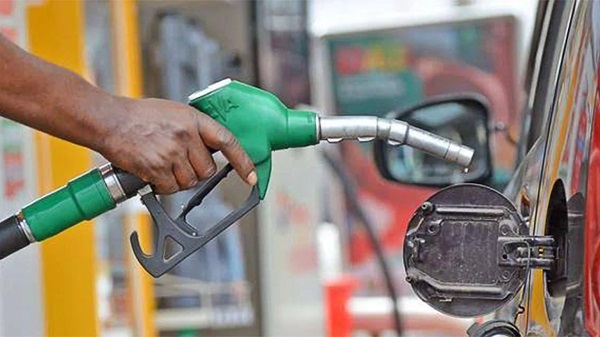

Special Adviser to the President on Information and Strategy, Bayo Onanuga, has said the removal of fuel subsidy is paying off handsomely leading to increase allocations at all tiers of government and investment in infrastructure.
Onanuga said higher statutory allocations had enabled subnational governments to invest more in roads, schools, hospitals, salaries, pensions and social programmes, while placing “more responsibility for socioeconomic development on states and local governments, while providing requisite funding.”
The presidential aide said successive governments had failed to tackle the major drain on public finances, despite acknowledging its damaging impact.
He added: “The current administration deserves commendation for being able to get rid of something that has become a lodestone around the neck of our collective patrimony. The policy had significantly increased allocations to states and local governments.”
Onanuga dismissed criticism on the tax reforms as “blatantly false,” saying the reforms were intended to protect low-income earners and small businesses while ensuring wealthier individuals and profitable enterprises pay their fair share.
He added: “The objective of the tax reforms is not merely to increase collections, but to create a broader, more equitable tax system. Those with greater capacity should bear a larger share of the tax burden, while micro-enterprises and vulnerable households receive greater protection”.
Highlighting the administration’s achievements in healthcare, education and infrastructure, Onanuga said more than 3,000 primary healthcare centres had been revitalised, over 78,000 frontline health workers retrained, and more than 100 public hospitals now offer free caesarean sections for indigent mothers.
He also said three world-class cancer centres are operational in Kubwa, Enugu and Katsina, while cancer treatment facilities in 13 states had been upgraded.
On education, Onanuga said over 11,000 projects had been executed through the Universal Basic Education Commission in partnership with state governments, adding that the Nigerian Education Loan Fund (NELFUND) had disbursed over N303 billion to more than 1.64 million students across 300 tertiary institutions.
On the allegation that the Federal Government had realised an undeclared oil windfall of N7.98 trillion, Onanuga described the claim as evidence of “analytical deficiency.”
ALSO READ: ADC: We’ll bring back fuel subsidy if elected
He said: “There is no such windfall of N7.98 trillion. The crude oil production averaged about 1.6 million barrels per day in the first half of 2026, below the budget projection of 1.84 million barrels per day, despite higher international oil prices.
“The convenient mistake many analysts make is to multiply the oil price by the daily crude production volume to determine revenue to the government. Such analyses ignore the cost of production, the share of crude belonging to the oil-producing companies and the impact of crude sale contracts.”
Onanuga challenged the former Vice President to “show the workings for his N7.98 trillion oil windfall”.
He said while that the reforms had imposed short-term hardships, they are laying the foundation for long-term economic stability.
Onanuga added: “The reforms have carried undeniable costs. Describing them as financial recklessness overlooks the broader context of structural change, fiscal rebalancing, and efforts to improve macroeconomic stability”.
He maintained that inflation had begun easing after the most difficult phase of the reforms and projected that it would trend towards 12 per cent by the end of the year.
The presidential spokesman said the Federal Government had complemented the reforms with social intervention programmes, including the ward-centric NG-CARES, HOPE and SOLID initiatives worth more than $3 billion, and cash transfers targeting 15 million vulnerable households.
ALSO READ: Nigerians reject IMF tax hike on fuel, others
He said: “Nigeria’s economy is not yet where it aspires to be. But neither is it where it stood at the height of its structural distortions. The fundamental reforms will continue to expand opportunity, strengthen institutions, and deliver tangible improvements in the lives of Nigerians.”
The presidential spokesman maintained that President Tinubu remained focused on economic transformation “while all else is an attempt by political carpetbaggers to gain attention”.
The presidential spokesman insisted that Nigeria’s economy had recovered significantly from the difficult adjustment period that followed the exchange-rate reforms, noting that the dollar-denominated Gross Domestic Product (GDP) had risen from about 377 billion, while naira GDP increased from about N314 trillion in 2024 to around N530 trillion.
He stressed: “The Nigerian economy that underwent painful adjustment in 2024 has evolved considerably. The reforms were never advertised as painless but were necessary to correct long-standing structural distortions.”
Onanuga also rejected Abubakar Atiku’s claim that the Tinubu administration was borrowing recklessly, saying that debt sustainability should be assessed against the country’s economic capacity rather than debt figures alone.
He said: “For debt, in itself, is not the defining measure of fiscal health. What matters are the size of the economy; our revenue-generating capacity; debt servicing costs; the purposes for which funds are borrowed; and whether borrowed resources finance productive investments or recurrent consumption.”
Onanuga noted that Nigeria’s debt-to-GDP ratio remained at about 40 per cent, while the debt service-to-revenue ratio had declined from nearly 100 per cent in December 2022 to less than 60 per cent under the Tinubu administration.
He added: “This is a remarkable achievement that shows that Nigeria’s revenue efficiency has improved, while debt management remains conservative and astute.”
Last week, Minister of Finance and Coordinating Minister of the Economy Taiwo Oyedele explained that subsidy savings are being spent on debt servicing, provision of infrastructure, loans to students, payment of increase in workers wages following the raising of minimum wage by more than 100 percent among others.