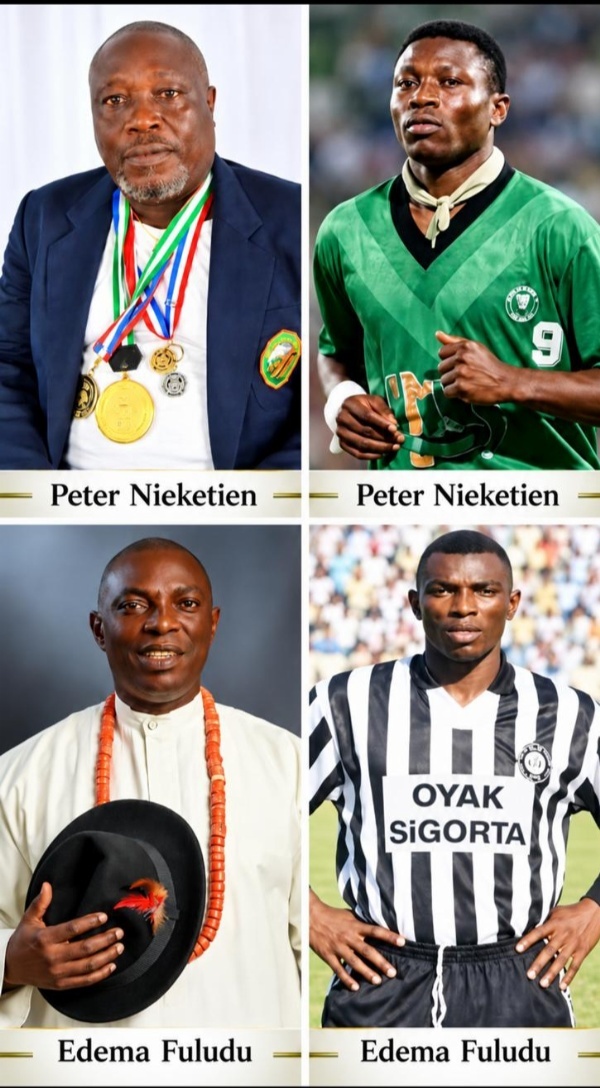

Fuludu points inward at ego and internal conflict. Nieketien points outward at exclusion and external influence. The deeper test is whether any organisation claiming to speak for Nigerian footballers has a mandate from the active players themselves — and whether that mandate can become the foundation for FIFPRO membership.
The FIFA-CAF engagements in Abuja on 14-15 September 2026 brought Nigeria’s unresolved players’ union divisions into sharper public view.
Sports Intel reported on 15 September 2026 that NANPF General Secretary Austin Popo’s accreditation was revoked at the last minute, while Tijani Babangida and Harrison Jalla of PFAN participated in the players’ constituency. NANPF nevertheless submitted a 90-page dossier directly to FIFA. Sports Intel reported that the NFF had allegedly revoked NANPF’s accreditation.
There is no public evidence establishing that NSC Chairman Shehu Dikko personally ordered Popo’s exclusion. That distinction should remain clear.
What the episode did expose was a broader question about access, recognition and the independence of player representation.
Four days later, Peter Nieketien, speaking with Charles Ogundiya in New Telegraph on 19 September 2026, asked:
“If, out of the four or three, you invite one or two and leave another one outside, how can there be unity?”
Nieketien also raised concerns about political influence and factions within player representation.
Edema Fuludu identified another side. Speaking to The Guardian through Gowon Akpodonor on 16 April 2022, he blamed “internal greed and ego associated with selfishness” and also referred to a divide-and-rule environment.
FULUDU POINTS INWARD: ego, selfishness and internal conflict.
NIEKETIEN POINTS OUTWARD: exclusion, influence and selective recognition.
The two explanations do not necessarily cancel each other out. Internal conflict can weaken a union; outside recognition or exclusion can deepen that conflict. If both forces are present, reconciliation must examine both.
WHAT FIFPRO WOULD VERIFY BEFORE MEMBERSHIP
A players’ association seeking FIFPRO membership would have to demonstrate that it genuinely represents professional footballers.
Under FIFPRO’s statutes, an applicant must provide its articles of association, relevant documentation, financial information and membership figures. Those figures must be externally verified, and FIFPRO may request additional information through its membership assessment process.
That makes several questions central:
Do active NPFL and NWFL players even know that PFAN, NANPF, ANFPU or another organisation claims to represent them?
WHAT DO FIFA-LICENSED AGENTS AND ACADEMY OWNERS KNOW?
Many Nigerian players move from academies into professional clubs at home or abroad. Around them are academy owners, FIFA-licensed agents, clubs, lawyers and advisers — people who often influence the transition from prospect to professional.
In European professional football, collective bargaining, standard player contracts and established players’ unions form part of a developed labour-relations structure. The UEFA-FIFPRO Europe framework supports minimum requirements for standard player contracts, while FIFPRO advises players to consult their national player union and/or FIFPRO before signing contracts so their employment rights and interests are protected.
That creates another layer of questions for Nigeria:
When academy players are being prepared for professional football, are they also being educated about employment rights, player representation and the role of a players’ union?
When FIFA-licensed agents move Nigerian players into foreign professional environments, do those players know which national player union represents footballers in the country where they are going?
Do agents explain the difference between individual representation by an agent and collective representation by a players’ union?
Do academy owners and agents know which Nigerian organisation, if any, has a verified mandate from active professional players?
Which Nigerian players’ organisations, if any, are agents and academies engaging with when educating young professionals about their rights?
FIFA requires a football agent to enter into a written representation agreement with a player and, before signing or amending it, to tell the player in writing to consider independent legal advice and obtain written confirmation of whether that advice was taken.
That makes education more than an abstract issue. A player preparing for Europe is not only learning how to train, compete and earn. The player is entering a profession.
Does that player understand who protects his or her individual contractual interests — and who represents the collective voice of professional footballers?
The inquiry then returns to the unions themselves:
How many active professional players are registered members of each organisation, and how many are men or women?
When were those membership figures last independently verified?
How many times in the last 12 months has each organisation met directly with active professional players? Which clubs were visited, how many players attended, and what concerns, resolutions or instructions came directly from those players?
When did each organisation last hold a congress or election? How many active professional players participated, how were they notified, and what voting rights did they exercise?
What documented services has each organisation delivered to active professional players?
Who represented players when salaries went unpaid, contracts were breached, employment was terminated, or injury-related contractual and legal disputes arose?
How many players received that assistance, and what outcomes were achieved?
FIFPRO stated on 23 April 2026 that legitimate player representation must be built “from the players up.” Its model requires independence, democratic legitimacy, governance standards and a genuine mandate from professional players themselves.
Membership numbers also matter inside FIFPRO. Under its voting structure:
- Fewer than 250 active professional members — one vote
- 250–499 — two votes
- 500–999 — three votes
- 1,000–1,999 — four votes
- 2,000 or more — five votes
The 1,000-player figure is therefore not a minimum requirement for FIFPRO membership. It is an important threshold in FIFPRO’s voting structure.
The deeper issue is whether membership is real, active, verifiable and connected to a genuine player mandate.
REPRESENTATION MUST ALSO BE MEASURED BY SERVICE
A professional players’ union is ultimately tested by what happens when its members need help.
Who represents an active player when months of salary go unpaid?
Who challenges an unlawful contract termination?
Who assists when employment rights are threatened?
Who helps players pursue domestic football remedies, FIFA Football Tribunal cases or other available legal avenues?
What documented services have these organisations delivered, how many active professional players have they represented, and what results were achieved?
Representation extends beyond invitations, titles or seats at stakeholder meetings. Its real value lies in the relationship between the union and its members and in the protection available when those members need help.
WHO GIVES THE MANDATE?
The NFF, NSC, NPFL, NWFL, clubs and other football authorities are important stakeholders.
But they are not the constituency from which a professional players’ union derives its mandate.
Under the FIFPRO model, those institutions cannot substitute their own preference for the democratic choice of active professional players.
The NFF cannot choose for the players.
The NSC cannot choose for the players.
The NPFL or NWFL cannot choose for the players.
Club officials cannot choose for the players.
They can engage with a legitimate players’ representative once that representative has a genuine player mandate. But the mandate itself must originate with: THE ACTIVE PROFESSIONAL PLAYERS.
That is the foundation of independence and legitimacy.
So the central question is not which football authority prefers PFAN, NANPF, ANFPU or another organisation. It is:
WHOM HAVE THE ACTIVE PROFESSIONAL PLAYERS THEMSELVES MANDATED TO SPEAK FOR THEM?
For any Nigerian organisation seeking FIFPRO membership, that answer would have to be supported by documentation, verified membership, governance records, democratic processes and evidence of genuine player representation.
Player meetings, independently verified membership, elections, documented services, independence and an identifiable active-player mandate are therefore not side issues. They are part of the evidence showing whether an association genuinely represents the professional workforce it claims to speak for.
THE LONGER-TERM DESTINATION: FIFPRO MEMBERSHIP
The objective should not end with deciding who represents Nigerian players locally.
The longer-term goal should be to build a credible, independent, democratically organised and player-mandated union capable of meeting the standards for FIFPRO membership — connecting Nigerian professionals to the international system of player representation, collective advocacy and protections available through the global players’ movement.
Fuludu identifies internal division.
Nieketien identifies exclusion and external influence.
The common denominator may lie in how those forces interact.
But genuine reconciliation ultimately has to return to the same source from which legitimacy should begin: THE ACTIVE PLAYERS THEMSELVES.
And from that foundation, Nigeria can pursue the larger destination: A CREDIBLE PATH TOWARD FIFPRO MEMBERSHIP.
AUTHOR’S NOTE
Paul Lucky Okoku takes no position for or against any faction, organisation or individual in Nigeria’s players’ union disputes.
The aim is to examine the public record, encourage reconciliation, educate the public and active professional players about international player-representation standards, and keep the players themselves at the centre of the discussion.
The FIFPRO model is used not simply as a reference point, but as a destination worth examining.
The ultimate objective is a credible, independent, democratically organised and player-mandated Nigerian union that effectively represents active professional players at home and works toward meeting the requirements for full FIFPRO membership, giving Nigerian players a stronger collective voice within the global professional football community.