
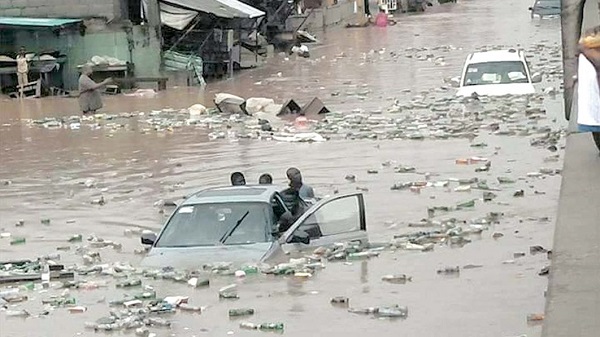

The Federal Government has placed Lagos, Ogun and 17 other states, including the FCT, on critical flood risk alert, warning that 915 communities face a high likelihood of flooding between August 27 and September 9, 2026.
According to the National Flood Early Warning Systems Centre, the 19 states and the FCT require immediate watch, preparedness and protective action. Residents in affected areas have been urged to prepare for possible evacuation.
Critical-risk states
The critical-risk states are: Kogi, Benue, Rivers, Edo, Delta, Cross River, Bayelsa, Akwa Ibom, Abia, Anambra, Ebonyi, Enugu, Imo, Ekiti, Lagos, Ogun, Ondo, Osun and Oyo.
Major cities named in the advisory include Lokoja, Makurdi, Port Harcourt, Benin City, Asaba, Calabar, Yenagoa, Uyo, Aba, Onitsha, Enugu, Owerri, Lagos, Abeokuta, Akure, Osogbo and Ibadan.
ALSO READ: Victims recount ordeals, losses as flash flood ravages Minna
Other risk levels
Beyond the critical list, 429 communities across seven states were classified as high risk, while 656 communities in 13 states were placed on moderate-risk watch.
High-risk states: Benue, Kogi, Kwara, Niger, Adamawa, Taraba and Kebbi.
Moderate-risk areas include the FCT and communities in Nasarawa, Plateau, Bauchi, Borno, Gombe, Yobe, Zamfara, Sokoto, Katsina, Kano and Kaduna.
What the government said
In a statement signed by Usman Abdullahi Bokani, Director of Erosion, Flood and Coastal Zone Management, the government blamed the projected risk on high soil moisture, heavy rainfall, rapid surface runoff, drainage surcharge and rising river levels.
Residents in critical zones were advised to:
- Monitor flood levels closely and identify evacuation routes now
- Protect vulnerable persons and move important documents, food, water and medicines to safety
- Stay off floodplains and avoid trading, parking or building along riverbanks, wetlands and drainage channels
- Disconnect power where inundation is likely and keep children away from floodwater
State emergency agencies, environmental officers and community flood focal persons were directed to step up surveillance around rivers, streams, culverts, bridges, drains and erosion-prone areas.
The government added that the forecast should be read alongside real-time local conditions, and that updates will continue as state governments and communities provide feedback.